Ohio Muslim Inmates Sue Over Meal Preparation

| Thursday, October 6, 2011 | 0 comments |
by Associated Press
A death row inmate says the Ohio prison system is denying him meals prepared according to Islamic law, known as halal, according to a federal lawsuit that alleges a civil rights violation.

Condemned inmate Abdul Awkal says the prison system's failure to provide the halal meals is a restraint on his religious freedoms.

Awkal, joined by a second inmate not on death row, says the vegetarian and non-pork options offered by the Department of Rehabilitation and Correction aren't good enough. The inmates say the food must be prepared in specific fashion, such as ensuring that an animal is butchered by slitting its throat and draining its blood, to conform with Islamic beliefs.

Awkal, 52, is scheduled to die in June for killing his estranged wife, Latife Awkal, and brother-in-law Mahmoud Abdul-Aziz in 1992, in a room in Cuyahoga County Domestic Relations Court.

Joining Awkal in the lawsuit is Cornelius Causey, 35, serving 15 years to life for murder and aggravated robbery convictions out of Hamilton County.

Ohio argues that it provides both non-pork and vegetarian meals to Muslims and says the courts have sided with this practice. The state also says that providing halal meals could hurt Ohio financially, given the current budget situation.

"The complete restructuring of ODRC's food service administration and preparation, at a cost of millions to the State of Ohio during fiscal crisis, is at stake," Ryan Dolan, an assistant attorney general, argued in a court filing.

Read More...

Click here for your free copy of Sharia Law For The Non Muslim...

Proposed List Of Demands For Occupy Wall St

| Tuesday, October 4, 2011 | 0 comments |
by Lloyd J. Hart

Demand one: Restoration of the living wage. This demand can only be met by ending "Freetrade" by re-imposing trade tariffs on all imported goods entering the American market to level the playing field for domestic family farming and domestic manufacturing as most nations that are dumping cheap products onto the American market have radical wage and environmental regulation advantages. Another policy that must be instituted is raise the minimum wage to twenty dollars an hr.

Demand two: Institute a universal single payer healthcare system. To do this all private insurers must be banned from the healthcare market as their only effect on the health of patients is to take money away from doctors, nurses and hospitals preventing them from doing their jobs and hand that money to wall st. investors.

Demand three: Guaranteed living wage income regardless of employment.

Demand four: Free college education.

Demand five: Begin a fast track process to bring the fossil fuel economy to an end while at the same bringing the alternative energy economy up to energy demand.

Demand six: One trillion dollars in infrastructure (Water, Sewer, Rail, Roads and Bridges and Electrical Grid) spending now.

Demand seven: One trillion dollars in ecological restoration planting forests, reestablishing wetlands and the natural flow of river systems and decommissioning of all of America's nuclear power plants.

Demand eight: Racial and gender equal rights amendment.

Demand nine: Open borders migration. anyone can travel anywhere to work and live.

Demand ten: Bring American elections up to international standards of a paper ballot precinct counted and recounted in front of an independent and party observers system.

Demand eleven: Immediate across the board debt forgiveness for all. Debt forgiveness of sovereign debt, commercial loans, home mortgages, home equity loans, credit card debt, student loans and personal loans now! All debt must be stricken from the "Books." World Bank Loans to all Nations, Bank to Bank Debt and all Bonds and Margin Call Debt in the stock market including all Derivatives or Credit Default Swaps, all 65 trillion dollars of them must also be stricken from the "Books." And I don't mean debt that is in default, I mean all debt on the entire planet period.

Demand twelve: Outlaw all credit reporting agencies.

Demand thirteen: Allow all workers to sign a ballot at any time during a union organizing campaign or at any time that represents their yeah or nay to having a union represent them in collective bargaining or to form a union.

These demands will create so many jobs it will be completely impossible to fill them without an open borders policy.

Read More...

Obama approves 2 solar loans worth $1B for bankrupt Solyndra

| Thursday, September 29, 2011 | 0 comments |
by Associated Press

Facing a Friday deadline, the Energy Department has approved two loan guarantees worth more than $1billion for solar energy projects in Nevada and Arizona.

Energy Secretary Steven Chu said the department has completed a $737 million loan guarantee to Tonopah Solar Energy for a 110 megawatt solar tower in Nevada, and a $337 million guarantee for Mesquite Solar 1 to develop a 150 megawatt solar plant in Arizona.

The loans were approved under the same program that paid for a $535 million loan to Solyndra Inc., a now-bankrupt solar panel maker that has become a rallying cry for Republican critics of the Obama administration's green energy program.

The latest loan program, approved under the 2009 economic stimulus law, expires Friday. At least seven projects worth about $5 billion are pending.

Read More...

No Room for Medicare Patients

| Monday, September 26, 2011 | 0 comments |
by Jane M. Orient, M.D.

When I went into solo practice of internal medicine in 1981, it was very easy to get a doctor to see a Medicare patient. All I had to do was make a phone call. A courteous receptionist answered. If the doctor couldn't come to the phone right away, I could count on a prompt callback.

Consultants saw patients quickly, and generally called me to discuss their findings and advice. And very often there would also be a letter in the mail: “Thank you for referring this delightful patient to me.”

How things have changed! Now a doctor gets the phone menu, just as the patients do, and it often ends in voice mail. It might be a few days before a staff member calls back—usually with the news that “we are not accepting any new Medicare patients.” At best, my patient might be offered an appointment in several months.

One very fine gentleman, who had recently moved to a rural area, found it easier to fly to Tucson to see me than to get in to see a local internist. That was in 2009. Recently, he has become unable to travel, so I needed to find him a local doctor.

I tried to expedite matters by ordering him an immediate diagnostic test: an abdominal CT scan. I don’t think anyone could argue that it wasn’t indicated under the circumstances. One little problem: I am not enrolled in Medicare and don’t have the proper government-issued number to enter into the computer. A license to practice medicine is not enough. This National Provider Identifier (NPI) is supposed to protect the system against being defrauded. Without that number, the imaging facility could not get paid by Medicare.

“Why not use the radiologist’s number?” I asked. After all, he was the one who would get paid. Nope, a referral was required. How about a self-referral from the patient? Nope, we can’t allow patients to decide what tests they need. “The patient is willing to pay for his own test,” I said. Nope, if he’s on Medicare, they aren’t allowed to take his money.

They gave the patient 24 hours to find a properly enumerated doctor to countersign my order. Fortunately, he found a specialist willing to do so, and assume potential criminal liability for committing “waste, fraud, and abuse” by ordering a “medically unnecessary” study. (Fortunately for the patient, he turned out not to have cancer, but that could be bad news for the doctor.)

So this is the status of retired Americans. They can’t just walk into a facility and request a medical test, and pay for it with their very own money. A man may be qualified to pilot a 747 across the Pacific, but once he’s on Medicare, he is unfit to make an unsupervised decision about his own medical care.

Read More...

$19.3 Billion only created 3,500 jobs

| Tuesday, September 20, 2011 | 0 comments |
by Carol D. Leonnig
and Steven Mufson

A $38.6 billion loan guarantee program that the Obama administration promised would create or save 65,000 jobs has created just a few thousand jobs two years after it began, government records show.

The program — designed to jump-start the nation’s clean technology industry by giving energy companies access to low-cost, government-backed loans — has directly created 3,545 new, permanent jobs after giving out almost half the allocated amount, according to Energy Department tallies.

President Obama has made “green jobs” a showcase of his recovery plan, vowing to foster new jobs, new technologies and more competitive American industries. But the loan guarantee program came under scrutiny Wednesday from Republicans and Democrats at a House oversight committee hearing about the collapse of Solyndra, a solar-panel maker whose closure could leave taxpayers on the hook for as much as $527 million.

Read More...

How to Know God Personally

| Saturday, September 17, 2011 | 0 comments |

How to Know God Personally

What does it take to begin a relationship with God? Devote yourself to unselfish religious deeds? Become a better person so that God will accept you?

You may be surprised that none of those things will work. But God has made it very clear in the Bible how we can know Him.

The following principles will explain how you can personally begin a relationship with God, right now, through Jesus Christ...

Principle 1:

God loves you and offers a wonderful plan for your life.


God's Love
"God so loved the world that He gave His one and only Son, that whoever believes in Him shall not perish, but have eternal life." 1

God's Plan
[Christ speaking] "I came that they might have life, and might have it abundantly" [that it might be full and meaningful]. 2

Why is it that most people are not experiencing the abundant life? Because...


Principle 2:

All of us sin and our sin has separated us from God.


We Are Sinful
"All have sinned and fall short of the glory of God." 3
We were created to have fellowship with God; but, because of our stubborn self-will, we chose to go our own independent way, and fellowship with God was broken. This self-will, characterized by an attitude of active rebellion or passive indifference, is evidence of what the Bible calls sin.

We Are Separated
"The wages of sin is death" [spiritual separation from God]. 4
This diagram illustrates that God is holy and people are sinful. A great gulf separates us. The arrows illustrate that we are continually trying to reach God and the abundant life through our own efforts, such as a good life, philosophy, or religion -- but we inevitably fail.

The third law explains the only way to bridge this gulf...


Principle 3:

Jesus Christ is God's only provision for our sin. Through Him we can know and experience God's love and plan for our life.


He Died in Our Place
"God demonstrates His own love toward us, in that while we were yet sinners, Christ died for us." 5

He Rose From the Dead
"Christ died for our sins...He was buried...He was raised on the third day, according to the Scriptures...He appeared to Peter, then to the twelve. After that He appeared to more than five hundred..." 6

He Is the Only Way to God
"Jesus said to him, 'I am the way, and the truth, and the life; no one comes to the Father, but through Me.'" 7

This diagram illustrates that God has bridged the gulf which separates us from Him by sending His Son, Jesus Christ, to die on the cross in our place to pay the penalty for our sins.

It is not enough just to know these three principles...


Principle 4:

We must individually receive Jesus Christ as Savior and Lord; then we can know and experience God's love and plan for our lives.


We Must Receive Christ
"As many as received Him, to them He gave the right to become children of God, even to those who believe in His name." 8

We Receive Christ Through Faith
"By grace you have been saved through faith; and that not of yourselves, it is the gift of God; not as a result of works, that no one should boast." 9

When We Receive Christ, We Experience a New Birth
We Receive Christ by Personal Invitation
[Christ speaking] "Behold, I stand at the door and knock; if any one hears My voice and opens the door, I will come in to him." 10

Receiving Christ involves turning to God from self (repentance) and trusting Christ to come into our lives to forgive our sins and to make us what He wants us to be. Just to agree intellectually that Jesus Christ is the Son of God and that He died on the cross for your sins is not enough. Nor is it enough to have an emotional experience. You receive Jesus Christ by faith, as an act of the will.

These two circles represent two kinds of lives:


Which circle best describes your life?
Which circle would you like to have represent your life?

The following explains how you can receive Christ:

You can receive Christ right now by faith through prayer

Prayer is talking to God. God knows your heart and is not so concerned with your words as He is with the attitude of your heart. The following is a suggested prayer:

"Lord Jesus, I need You. Thank You for dying on the cross for my sins. I open the door of my life and receive You as my Savior and Lord. Thank You for forgiving my sins and giving me eternal life. Take control of the throne of my life. Make me the kind of person You want me to be."

If this prayer expresses the desire of your heart, then you can pray this prayer right now and Christ will come into your life, as He promised.

Does this prayer express the desire of your heart?


Yes, I just asked Jesus into my life »


I may want to ask Jesus into my life,
but I have a question I would like answered first »


(1) John 3:16 (NIV); (2) John 10:10; (3) Romans 3:23; (4) Romans 6:23; (5) Romans 5:8; (6) 1 Corinthians 15:3-6; (7) John 14:6; (8) John 1:12; (9) Ephesians 2:8,9; (10) Revelation 3:20

Adapted from Have You Heard of the Four Spiritual Laws and Would You Like to Know God Personally, by Dr. Bill Bright, co-founder of Campus Crusade for Christ.

Read More...

3 to 4.3 Billion Barrels of Oil in North Dakota and Montana

| Thursday, September 15, 2011 | 0 comments |
3 to 4.3 Billion Barrels of Technically Recoverable Oil
Assessed in North Dakota and Montana’s Bakken
Formation—25 Times More Than 1995 Estimate

by U.S. Department of the Interior
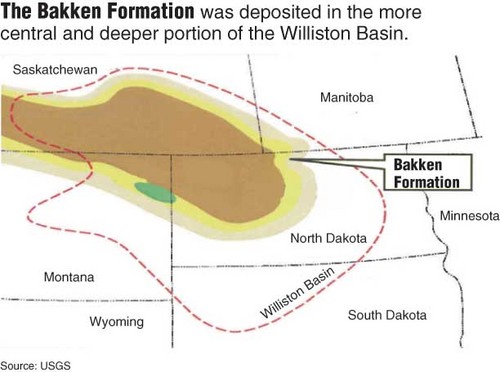
Reston, VA - North Dakota and Montana have an estimated 3.0 to 4.3 billion barrels of undiscovered, technically recoverable oil in an area known as the Bakken Formation.

A U.S. Geological Survey assessment, released April 10, shows a 25-fold increase in the amount of oil that can be recovered compared to the agency's 1995 estimate of 151 million barrels of oil.

New geologic models applied to the Bakken Formation, advances in drilling and production technologies, and recent oil discoveries have resulted in these substantially larger technically recoverable oil volumes.

The Bakken Formation estimate is larger than all other current USGS oil assessments of the lower 48 states and is the largest "continuous" oil accumulation ever assessed by the USGS. A "continuous" oil accumulation means that the oil resource is dispersed throughout a geologic formation rather than existing as discrete, localized occurrences. The next largest "continuous" oil accumulation in the U.S. is in the Austin Chalk of Texas and Louisiana, with an undiscovered estimate of 1.0 billions of barrels of technically recoverable oil.

"It is clear that the Bakken formation contains a significant amount of oil - the question is how much of that oil is recoverable using today's technology?" said Senator Byron Dorgan, of North Dakota. "To get an answer to this important question, I requested that the U.S. Geological Survey complete this study, which will provide an up-to-date estimate on the amount of technically recoverable oil resources in the Bakken Shale formation."

The USGS estimate of 3.0 to 4.3 billion barrels of technically recoverable oil has a mean value of 3.65 billion barrels. Scientists conducted detailed studies in stratigraphy and structural geology and the modeling of petroleum geochemistry. They also combined their findings with historical exploration and production analyses to determine the undiscovered, technically recoverable oil estimates.

Read More...

9 Foods Not to Give Your Kids

| Tuesday, September 13, 2011 | 0 comments |
By Joe Wilkes

If you've followed the news on childhood obesity lately, you know the state of affairs is pretty grim. Childhood obesity rates have tripled over the past two decades, and most signs point to the next generation being the first whose life expectancy will be shorter than their parents'. Much of the blame for this trend has deservedly been laid at the feet of the producers and marketers of unhealthy food aimed at our youngest consumers, whose parents face an uphill battle: trying to pit fresh, healthy foods devoid of mascots or sidekicks against superheroes and cartoon animals in a struggle to tempt their children's palates and stomachs.

Since most kids have hummingbird metabolisms that adults can only envy, it's often easy to give them a free pass and let them eat whatever they want. But eventually those metabolisms slow down and the pounds settle in. Also, as physical activity decreases and processed food intake increases annually, kids aren't burning calories the way their parents might have when they were their age. And even if the kids aren't getting fat, they are establishing eating habits they'll take into adulthood. As parents, you can help foster a love for healthy eating and exercise that will last your kids a lifetime—hopefully a long one!

Eating can so often be a classic power struggle where kids try to finally locate their mom and dad's last nerve. (I can remember family dinners with my brother and parents that could teach Hezbollah a thing or two about standoffs.) There are a number of strategies you can use to mitigate this type of deadlock. One is to let your kids help with the selection and preparation of the food. If they picked out the veggies at the farmers' market and helped cook them, they might be less inclined to feed them to the family pet. Another is to frame eating vegetables and healthy food as being its own reward. Otherwise, by offering dessert as a reward for finishing vegetables, you create a system where unhealthy food is a treat and healthy food sucks. With these thoughts in mind, let's take a look at some of the most unhealthy foods being marketed to your kids today, and some healthier alternatives you can offer to replace each of them.

Note: The following recommendations are for school-aged children. Infants and toddlers have different specific nutritional needs not addressed in this article.

1. Chicken nuggets/tenders. These popular kids' menu items are little nuggets of compressed fat, sodium, high fructose corn syrup (HFCS), and in some form chicken. Depending on the restaurant, chicken might not even be the first ingredient. Oftentimes, the nuggets or tenders are made of ground pieces of chicken meat and skin, pressed into a shape, flavored with HFCS and salt, and batter-fried in hydrogenated oil (the bad, trans-fatty stuff). Then, as if that weren't unhealthy enough, you dunk it in a HFCS- or mayonnaise-based sauce. With all the fat, salt, and sugar, it's easy to understand why they're tasty, but the nutritive value weighed against the huge amount of calories and fat consumed is incredibly lacking. Even healthier-sounding menu items can be deceiving, like McDonald's® Premium Breast Strips (5 pieces), which pack 640 calories and 38 grams of fat—and that's before you factor in the dipping sauce. (By comparison, a Big Mac® with sauce has 540 calories and 29 grams of fat.)

Instead: If you're cooking at home, grill a chicken breast and cut it into dipping-size pieces either with a knife or, for extra fun, cookie cutters. Make a healthy dipping sauce from HFCS-free ketchup, marinara sauce, mustard, or yogurt. Let your kids help make the shapes or mix up the sauce. Try and go without breading, but if you must, try dipping the chicken breast in a beaten egg, and then rolling it in cornflake crumbs before you bake it. It'll be crunchy and delicious, but not as fatty.

2. Sugary cereal. I can remember as a child, after going to friends' houses for overnights and being treated to breakfast cereals with marshmallows that turned the milk fluorescent pink or blue, feeling horribly deprived when faced with the less colorful and sugary options served up in my home kitchen. But now I can appreciate my mom and her unpopular brands and granolas. True, they didn't have any cartoon characters on the box or any toy surprises, but they also didn't have the cups of sugar, grams of fat, and hundreds of empty calories that these Saturday-morning staples are loaded with.

Instead: Read the labels and try to find cereal that's low in sugar and high in fiber and whole grains. Remember, "wheat" is not the same as "whole wheat." Also, avoid cereals (including some granolas) that have hydrogenated oils, artificial colors, or chemical preservatives. Add raisins, sliced bananas, berries, or other seasonal fruit to the cereal for extra flavor and nutrition. Again, letting your child help design a healthy bowl of cereal from choices you provide will get you a little more buy-in at the breakfast table.

3. Lunch meat and hot dogs. Kids love hot dogs, bologna, and other processed meats, but these are all full of potentially carcinogenic nitrates and nitrites, sodium, saturated fat, and artificial colors and fillers. A study in Los Angeles found that kids who ate 12 hot dogs a month had nine times the risk of developing leukemia.1 And more health risks are being discovered all the time. Leaf through any research about kids' nutrition, and you're bound to read about the bane of the cafeteria—Oscar Mayer's Lunchables®. These and similar prepackaged lunches are loaded with processed meats and crackers made with hydrogenated oils. These innocent-looking meals can boast fat counts of up to 38 grams. That's as much fat as a Burger King® Whopper® and more than half the recommended daily allowance of fat for an adult.

Instead: Get unprocessed meats, like lean turkey breast, chicken, tuna, or roast beef. Use whole wheat bread for sandwiches; or if your kid's dying for Lunchables, fill a small plastic container with whole-grain, low-fat crackers, lean, unprocessed meat, and low-fat cheese. This can be another great time to get out the cookie cutters to make healthy sandwiches more fun. For hot dogs, read labels carefully. Turkey dogs are usually a good bet, but some are pumped up with a fair amount of chemicals and extra fat to disguise their fowl origins. Look for low levels of fat, low sodium, and a list of ingredients you recognize. There are some tasty veggie dogs on the market, although a good deal of trial and error may be involved for the choosy child.

4. Juice and juice-flavored drinks. Juice—what could be wrong with juice? While 100 percent juice is a good source of vitamin C, it doesn't have the fiber of whole fruit, and provides calories mostly from sugar and carbohydrates. Too much juice can lead to obesity and tooth decay, among other problems. The American Academy of Pediatrics suggests 4 to 6 ounces of juice per day for kids under 6, and 8 to 12 ounces for older kids. Juice drinks that aren't 100 percent juice are usually laced with artificial colors and that old standby, high fructose corn syrup, and should be avoided. Your best bet is to make your own juice from fresh, seasonal fruit. You won't have to worry about all the additives, and it's another way you can involve your kids in the cooking process. Let them design their own juice "cocktail."

Instead: Water is still the best thirst quencher. Explain the importance of good hydration to your kids, and try to set a good example yourself by carrying around a healthy reusable hard plastic or stainless steel water bottle. Get your kids used to carrying a small bottle of water in their backpack or attached to their bike. If they're very water averse, try water with a splash of fruit juice in it. But just a splash. The idea is to get your kids used to not having things be overly sweet, overly salty, or overly fatty. Another great beverage is milk. Growing kids need plenty of milk (or fortified nondairy milks, like soy or almond)—which is filled with nutrients, calcium, and (in the case of dairy and soy) protein—but they don't need too much fat, so choosing low-fat or nonfat options will help ensure that they get their milk without actually beginning to resemble a cow.

5. French fries. High in calories, high in fat, and high in sodium—and unsurprisingly the most popular "vegetable" among kids. Fries offer virtually none of the nutrients found in broccoli, carrots, spinach, or other veggies not cooked up in a deep fryer, and the fat they're fried in is often trans fat, the unhealthiest kind for the heart. To top it all off, studies are beginning to show cancer-causing properties from acrylamide, a toxic substance that is created when starchy foods like potatoes are heated to extreme temperatures. In some tests, the amount of acrylamide in French fries was 300 to 600 times higher than the amount the EPA allows in a glass of water.2

Instead: Vegetables like baby carrots, celery sticks, and other crudités are great options, but if potatoes must be had, there are some options that don't involve melting a brick of fat. A scooped-out potato skin with low-fat chili and a little cheese can provide lots of fiber and vitamins, with even higher amounts if the chili has beans. You can also try making baked fries, using slices of potato with a light brushing of olive oil. Or the classic baked potato could be a hit, with plain yogurt or cottage cheese instead of sour cream and butter.

6. Potato chips, Cheetos®, Doritos®, etc. These are full of fat, oftentimes saturated, and way more sodium than any child or adult should eat. Some chips also have the acrylamide problem discussed in #5, French fries, above. Also, watch out for innocent-seeming baked and low-fat chips that contain olestra or other fake fats and chemicals that could present health issues for kids.

Instead: Kids gotta snack, and in fact, since their stomachs are smaller, they aren't usually able to go as long between meals as adults. Cut-up vegetables are the best thing if your kids want to get their crunch on, but air-popped popcorn and some baked chips are okay, too. You can control how much salt goes on the popcorn, or involve your child in experimenting with other toppings like red pepper, Parmesan cheese, or dried herbs. Try making your own trail mix with your kids. They might be more excited to eat their own personal blend, and that way you can avoid certain store-bought trail mixes, which sometimes contain ingredients like chocolate chips and marshmallows that aren't exactly on the healthy snack trail.

7. Fruit leather. Many of these gelatinous snacks like roll-ups or fruit bites contain just a trace amount of fruit, but lots of sugar or HFCS and bright artificial colors. Don't be misled by all the products that include the word "fruit" on their box. Real fruit is in the produce section, not the candy aisle.

Instead: If your child doesn't show interest in fruit in its natural state, there are some ways you can make it more interesting without losing its nutritional value. For a healthy frozen treat, try filling ice-cube or frozen-pop trays with fruit juice or freezing grapes. Or buy unflavored gelatin and mix it with fruit juice and/or pieces of fruit to make gelatin treats without the added sugar and color (let it solidify in big flat casserole dishes or roasting pans—another good time for the cookie cutters!) Try serving some raisins, dried apricots, apples, peaches, or other dried fruits that might give you that chewy, leathery texture without the sugar.

8. Doughnuts. These little deep-fried gobs of joy are favorites for kids and adults alike, but they are full of fat and trans-fatty acids, and of course, sugar. Toaster pastries, muffins, and cinnamon buns aren't much better. The worst thing about doughnuts and these other pastries, aside from their nutritional content, is that they're often presented to children as acceptable breakfast choices. These delicious deadlies need to be categorized properly—as desserts, to be eaten very sparingly. And you can't have dessert for breakfast.

Instead: Honestly, a slice of whole wheat toast spread with sugar-free fruit spread or peanut butter isn't going to get as many fans as a chocolate-filled Krispy Kreme® doughnut, but at some point, you have to stand firm. Be the cop who doesn't like doughnuts. Doughnuts—not for breakfast. Period.

9. Pizza. In moderation, pizza can be a fairly decent choice. If you order the right toppings, you can get in most of your food groups. The problem comes with processed meats like pepperoni and sausage, which add fat and nitrates/nitrites (see #3, Lunch meat and hot dogs, above); and the overabundance of cheese, which will also provide more calories and fat than a child needs.

Instead: Try making your own pizza with your kids. Use premade whole wheat crusts, or whole wheat tortillas, English muffins, or bread as a base. Then brush on HFCS-free sauce, and set up a workstation with healthy ingredients like diced chicken breast, sliced turkey dogs, and vegetables that each child can use to build his or her own pizza. Then sprinkle on a little cheese, bake, and serve. If your child gets used to eating pizza like this, delivery pizzas may seem unbearably greasy after awhile.

Someday your children will come to realize that caped men in tights and sponges who live under the sea might not have their best interests at heart when it comes to food. Until then, however, why not involve them in the process of selecting and preparing healthier alternatives? Some of these cleverly disguised wholesome foods might become their favorites. Who knows, they may even tempt some of the overgrown children among us!

References
1 Peters J, et al. "Processed meats and risk of childhood leukemia (California, USA)" Cancer Causes & Control 5: 195-202, 1994

2 Tareke E, Rydberg P, Karlsson P, et al. "Analysis of acrylamide, a carcinogen formed in heated foodstuffs" J. of Agri and Food Chem. 2002;50:4988-5006

Read More...