by Associated Press
Facing a Friday deadline, the Energy Department has approved two loan guarantees worth more than $1billion for solar energy projects in Nevada and Arizona.
Energy Secretary Steven Chu said the department has completed a $737 million loan guarantee to Tonopah Solar Energy for a 110 megawatt solar tower in Nevada, and a $337 million guarantee for Mesquite Solar 1 to develop a 150 megawatt solar plant in Arizona.
The loans were approved under the same program that paid for a $535 million loan to Solyndra Inc., a now-bankrupt solar panel maker that has become a rallying cry for Republican critics of the Obama administration's green energy program.
The latest loan program, approved under the 2009 economic stimulus law, expires Friday. At least seven projects worth about $5 billion are pending.
Read More...
Showing posts with label Energy. Show all posts
Obama approves 2 solar loans worth $1B for bankrupt Solyndra
Posted by
MyNewsLinx
| Thursday, September 29, 2011 |
0
comments
|
Labels:
Energy,
Government Waste,
Green Jobs,
Obama Administration,
Solar Panels
Nuclear Iran
Posted by
MyNewsLinx
| Thursday, September 22, 2011 |
0
comments
|
Labels:
Energy,
Humor,
Hypocrisy,
Iran,
Nuclear Energy,
Political Correctness,
Propaganda,
Regulation
3 to 4.3 Billion Barrels of Oil in North Dakota and Montana
Posted by
MyNewsLinx
| Thursday, September 15, 2011 |
0
comments
|
Labels:
Bakken Formation,
Energy,
Oil
3 to 4.3 Billion Barrels of Technically Recoverable Oil
Assessed in North Dakota and Montana’s Bakken
Formation—25 Times More Than 1995 Estimate
by U.S. Department of the Interior
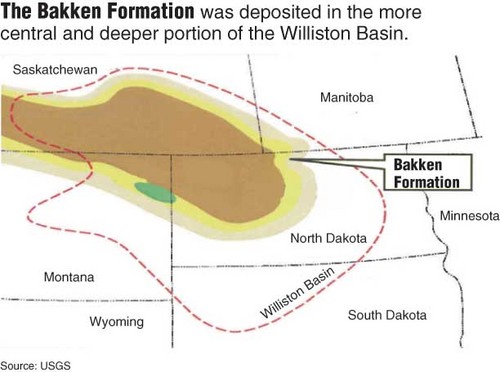
Reston, VA - North Dakota and Montana have an estimated 3.0 to 4.3 billion barrels of undiscovered, technically recoverable oil in an area known as the Bakken Formation.
A U.S. Geological Survey assessment, released April 10, shows a 25-fold increase in the amount of oil that can be recovered compared to the agency's 1995 estimate of 151 million barrels of oil.
New geologic models applied to the Bakken Formation, advances in drilling and production technologies, and recent oil discoveries have resulted in these substantially larger technically recoverable oil volumes.
The Bakken Formation estimate is larger than all other current USGS oil assessments of the lower 48 states and is the largest "continuous" oil accumulation ever assessed by the USGS. A "continuous" oil accumulation means that the oil resource is dispersed throughout a geologic formation rather than existing as discrete, localized occurrences. The next largest "continuous" oil accumulation in the U.S. is in the Austin Chalk of Texas and Louisiana, with an undiscovered estimate of 1.0 billions of barrels of technically recoverable oil.
"It is clear that the Bakken formation contains a significant amount of oil - the question is how much of that oil is recoverable using today's technology?" said Senator Byron Dorgan, of North Dakota. "To get an answer to this important question, I requested that the U.S. Geological Survey complete this study, which will provide an up-to-date estimate on the amount of technically recoverable oil resources in the Bakken Shale formation."
The USGS estimate of 3.0 to 4.3 billion barrels of technically recoverable oil has a mean value of 3.65 billion barrels. Scientists conducted detailed studies in stratigraphy and structural geology and the modeling of petroleum geochemistry. They also combined their findings with historical exploration and production analyses to determine the undiscovered, technically recoverable oil estimates.
Read More...
US Has Enough Energy Resourses For Over 1000 Years
Posted by
MyNewsLinx
| Sunday, August 28, 2011 |
0
comments
|
Labels:
Coal,
Dishonesty,
Energy,
Oil,
Propaganda
The truth about ANWR
Posted by
MyNewsLinx
| Monday, August 22, 2011 |
0
comments
|
Labels:
Alaska,
ANWR,
Energy,
Environmentalism,
Glenn Beck,
Oil,
Propaganda,
Truth
Stop The Global Warming Lies
Posted by
MyNewsLinx
| Wednesday, July 20, 2011 |
0
comments
|
Labels:
Climate Change,
Dishonesty,
Energy,
Environment,
Fraud,
Global Warming,
IPCC,
Political Correctness,
Propaganda,
Truth
by Jim Lacey
Whether it’s energy policy, global warming, or nuclear waste, if our regulators get the wrong answer, they make one up.
Effective policy cannot be built on lies and myths. But when it comes to energy policy that seems to be all we have to go on. A report recently released by the EPA, for instance, claims that by 2020 regulations enacted under the Clean Air Act will provide an annual benefit of $2 trillion for a cost of $66 billion, a 30-to-1 return on investment. And that is the EPA’s low estimate. In a best-case scenario, the benefits could reach as high as $5.5 trillion, a 90-to-1 return, or $48,000 for every American household. Where do I go for my check?
Unfortunately, the EPA is lying. Not about everything: The $66 billion cost is real, though probably low-balled. EPA regulations will most definitely remove that $66 billion from the economy, making it unavailable for job-creating investment. But what of the $2 trillion in benefits? According to analysis by economists W. David Montgomery and Anne E. Smith, these gains are an illusion. The $2 trillion figure was based on nothing more than a survey asking Americans how much they would pay to live an extra few weeks or months, or to have a little extra visibility on a clear day.
The EPA estimate, therefore, has nothing to do with job creation, economic growth, or real economic output. It has everything to do with hiding the fact that EPA regulations will place a crushing burden on the economy. The EPA knows this. In fact, in the same report that purports to prove that we all gain from more regulations, there is a real macroeconomic study, one done by EPA economists rather than policy officials. They find that past EPA rules slowed the economy by $79 billion in 2010, and will slow it by $110 billion in 2020.
Poof! In the EPA’s own report a $2 trillion annual benefit turns into a $110 billion annual loss. That is a lot of jobs.
The lies and myth-making do not end there. Last month the infamous Intergovernmental Panel on Climate Change (IPCC) once again let its global-warming agenda get ahead of the facts. The IPCC claimed that “Close to 80 percent of the world’s energy supply could be met by renewables by mid-century if backed by the right enabling public policies.”
We had to wait a few weeks for the supporting evidence. It turns out that to get to that 80 percent number the folks at the IPCC threw out 163 scenarios where their models did not give them the answer they wanted. Only on the 164th try did they finally get an answer they liked. Moreover, the report the IPCC used as the basis for its claim turns out to have been written by Greenpeace activists in conjunction with a lobbying group for renewable energy. No real scientists or engineers were involved. But the story gets even better. For the IPCC model to work, they researchers had to assume the world will be using less energy in 2050 than it is today. By that date there may be 2 billion more people on the planet, all clamoring for their fair share of energy resources. But somehow the IPCC thinks we will be using less energy!
Read More...
Whether it’s energy policy, global warming, or nuclear waste, if our regulators get the wrong answer, they make one up.
Effective policy cannot be built on lies and myths. But when it comes to energy policy that seems to be all we have to go on. A report recently released by the EPA, for instance, claims that by 2020 regulations enacted under the Clean Air Act will provide an annual benefit of $2 trillion for a cost of $66 billion, a 30-to-1 return on investment. And that is the EPA’s low estimate. In a best-case scenario, the benefits could reach as high as $5.5 trillion, a 90-to-1 return, or $48,000 for every American household. Where do I go for my check?
Unfortunately, the EPA is lying. Not about everything: The $66 billion cost is real, though probably low-balled. EPA regulations will most definitely remove that $66 billion from the economy, making it unavailable for job-creating investment. But what of the $2 trillion in benefits? According to analysis by economists W. David Montgomery and Anne E. Smith, these gains are an illusion. The $2 trillion figure was based on nothing more than a survey asking Americans how much they would pay to live an extra few weeks or months, or to have a little extra visibility on a clear day.
The EPA estimate, therefore, has nothing to do with job creation, economic growth, or real economic output. It has everything to do with hiding the fact that EPA regulations will place a crushing burden on the economy. The EPA knows this. In fact, in the same report that purports to prove that we all gain from more regulations, there is a real macroeconomic study, one done by EPA economists rather than policy officials. They find that past EPA rules slowed the economy by $79 billion in 2010, and will slow it by $110 billion in 2020.
Poof! In the EPA’s own report a $2 trillion annual benefit turns into a $110 billion annual loss. That is a lot of jobs.
The lies and myth-making do not end there. Last month the infamous Intergovernmental Panel on Climate Change (IPCC) once again let its global-warming agenda get ahead of the facts. The IPCC claimed that “Close to 80 percent of the world’s energy supply could be met by renewables by mid-century if backed by the right enabling public policies.”
We had to wait a few weeks for the supporting evidence. It turns out that to get to that 80 percent number the folks at the IPCC threw out 163 scenarios where their models did not give them the answer they wanted. Only on the 164th try did they finally get an answer they liked. Moreover, the report the IPCC used as the basis for its claim turns out to have been written by Greenpeace activists in conjunction with a lobbying group for renewable energy. No real scientists or engineers were involved. But the story gets even better. For the IPCC model to work, they researchers had to assume the world will be using less energy in 2050 than it is today. By that date there may be 2 billion more people on the planet, all clamoring for their fair share of energy resources. But somehow the IPCC thinks we will be using less energy!
Read More...
CRS Report: US Has Largest Energy Resources on Earth
by Peter C GloverIn case anyone missed it, let me repeat something that is of a magnitude of 10 on the scale of news-quakes for Joe Public USA: America’s combined energy resources are, according to a new report from the Congressional Research Service (CSR), the largest on earth. They eclipse Saudi Arabia (3rd), China (4th) and Canada (6th) combined – and that’s without including America’s shale oil deposits and, in the future, the potentially astronomic impact of methane hydrates.
“The Obama administration has made a conscious policy choice to raise energy prices, accomplished in good measure by restricting access to domestic energy supplies.” So says Senator James Inhofe, a Ranking Member of the Senate Environment and Public Works Committee. He adds forthrightly, “We could help bring affordable energy to consumers, create new jobs, and grow the economy if the Obama administration would simply get out of the way so America can realize its true energy potential.”
While the US is often depicted as having only a tiny minority of the world’s oil reserves at around 28 billion barrels (based on the somewhat misleading figure of ‘proven reserves’) according to the CRS in reality it has around 163 billion barrels. As Inhofe’s EPW press release comments, “That’s enough oil to maintain America’s current rates of production and replace imports from the Persian Gulf for more than 50 years”. Next up, there’s coal. The CRS report reveals America’s reserves of coal are unsurpassed, accounting for over 28 percent of the world’s coal. Much of it is high quality too. The CRS estimates US recoverable coal reserves at around 262 billion tons (not including further massive, difficult to access, Alaskan reserves). Given the US consumes around 1.2 billion tons a year, that’s a couple of centuries of coal use, at least.
Read More...
Ethanol Subsidy Finally Eliminated
Posted by
MyNewsLinx
| Tuesday, June 21, 2011 |
0
comments
|
Labels:
CO2,
Energy,
Environmentalism,
Ethanol,
Government Waste,
Green House Gases
by Lurita Doan
A stubborn Washington has taken a long time to finally come to its senses and kill ethanol subsides. Once heralded as a great "green" initiative, studies soon proved that diverting huge amounts of American farmland to the production of expensive corn-based ethanol actually increased green house gases. America's best scientists warned stubborn senators that the nation’s ethanol policy was not achieving the desired results, even as it consumed massive amounts of taxpayer money.
Read More...
A stubborn Washington has taken a long time to finally come to its senses and kill ethanol subsides. Once heralded as a great "green" initiative, studies soon proved that diverting huge amounts of American farmland to the production of expensive corn-based ethanol actually increased green house gases. America's best scientists warned stubborn senators that the nation’s ethanol policy was not achieving the desired results, even as it consumed massive amounts of taxpayer money.
Read More...
New EPA Rules Will Increase Cost of Energy
Posted by
MyNewsLinx
| Monday, June 20, 2011 |
0
comments
|
Labels:
CO2,
Coal,
Energy,
Environmentalism,
EPA,
Fraud,
Obama Administration,
Propaganda,
Regulation
by IBD Editorials
Overregulation: The Environmental Protection Agency has two new rules it wants to impose on utilities that use coal. But the rules make sense only if you want less energy, higher prices and fewer jobs.
Remember then-candidate Barack Obama's comment in January 2008 that the price of electricity would "necessarily skyrocket" once his policies went into effect?
It's now coming to pass — just as OPEC has decided it doesn't want to pump more oil. Get the picture? We're being systematically starved of energy, and our economy is suffering. Just don't ask the White House to help.
Broadly, the new EPA rules seek to clean up the air. Everyone's for that, of course. But at what cost?
According to a study the economic consulting firm National Economic Research Associates conducted for the coal industry, the two new rules mentioned above will by themselves cost electric utilities $184 billion by 2030 and kill 1.4 million jobs.
So why do it? Coal, our nation's No. 1 energy source for making electricity, is "dirty." And granted, coal isn't the cleanest available energy. But clean-coal technologies make it cleaner than ever.
It's also the least expensive and most easily available energy we have. For a pittance, it provides fully half the power we need to heat and cool our homes and run our TVs and computers.
But if these EPA rules go into effect, the cost of energy will shoot up 11% to 23% in just a few years.
Read More...
Overregulation: The Environmental Protection Agency has two new rules it wants to impose on utilities that use coal. But the rules make sense only if you want less energy, higher prices and fewer jobs.
Remember then-candidate Barack Obama's comment in January 2008 that the price of electricity would "necessarily skyrocket" once his policies went into effect?
It's now coming to pass — just as OPEC has decided it doesn't want to pump more oil. Get the picture? We're being systematically starved of energy, and our economy is suffering. Just don't ask the White House to help.
Broadly, the new EPA rules seek to clean up the air. Everyone's for that, of course. But at what cost?
According to a study the economic consulting firm National Economic Research Associates conducted for the coal industry, the two new rules mentioned above will by themselves cost electric utilities $184 billion by 2030 and kill 1.4 million jobs.
So why do it? Coal, our nation's No. 1 energy source for making electricity, is "dirty." And granted, coal isn't the cleanest available energy. But clean-coal technologies make it cleaner than ever.
It's also the least expensive and most easily available energy we have. For a pittance, it provides fully half the power we need to heat and cool our homes and run our TVs and computers.
But if these EPA rules go into effect, the cost of energy will shoot up 11% to 23% in just a few years.
Read More...
Renewable Energy Requires Vast Amounts of Natural Resources
Posted by
MyNewsLinx
| Monday, June 13, 2011 |
0
comments
|
Labels:
Energy,
Environment,
Environmentalism,
Solar Panels,
Unintended Consequences,
Wind
by Robert Bryce
IN April, Gov. Jerry Brown made headlines by signing into law an ambitious mandate that requires California to obtain one-third of its electricity from renewable energy sources like sunlight and wind by 2020. Twenty-nine states and the District of Columbia now have renewable electricity mandates. President Obama and several members of Congress have supported one at the federal level. Polls routinely show strong support among voters for renewable energy projects — as long as they don’t cost too much.
But there’s the rub: while energy sources like sunlight and wind are free and naturally replenished, converting them into large quantities of electricity requires vast amounts of natural resources — most notably, land. Even a cursory look at these costs exposes the deep contradictions in the renewable energy movement.
Consider California’s new mandate. The state’s peak electricity demand is about 52,000 megawatts. Meeting the one-third target will require (if you oversimplify a bit) about 17,000 megawatts of renewable energy capacity. Let’s assume that California will get half of that capacity from solar and half from wind. Most of its large-scale solar electricity production will presumably come from projects like the $2 billion Ivanpah solar plant, which is now under construction in the Mojave Desert in southern California. When completed, Ivanpah, which aims to provide 370 megawatts of solar generation capacity, will cover 3,600 acres — about five and a half square miles.
The math is simple: to have 8,500 megawatts of solar capacity, California would need at least 23 projects the size of Ivanpah, covering about 129 square miles, an area more than five times as large as Manhattan. While there’s plenty of land in the Mojave, projects as big as Ivanpah raise environmental concerns. In April, the federal Bureau of Land Management ordered a halt to construction on part of the facility out of concern for the desert tortoise, which is protected under the Endangered Species Act.
Wind energy projects require even more land. The Roscoe wind farm in Texas, which has a capacity of 781.5 megawatts, covers about 154 square miles. Again, the math is straightforward: to have 8,500 megawatts of wind generation capacity, California would likely need to set aside an area equivalent to more than 70 Manhattans. Apart from the impact on the environment itself, few if any people could live on the land because of the noise (and the infrasound, which is inaudible to most humans but potentially harmful) produced by the turbines.
Read More...
IN April, Gov. Jerry Brown made headlines by signing into law an ambitious mandate that requires California to obtain one-third of its electricity from renewable energy sources like sunlight and wind by 2020. Twenty-nine states and the District of Columbia now have renewable electricity mandates. President Obama and several members of Congress have supported one at the federal level. Polls routinely show strong support among voters for renewable energy projects — as long as they don’t cost too much.
But there’s the rub: while energy sources like sunlight and wind are free and naturally replenished, converting them into large quantities of electricity requires vast amounts of natural resources — most notably, land. Even a cursory look at these costs exposes the deep contradictions in the renewable energy movement.
Consider California’s new mandate. The state’s peak electricity demand is about 52,000 megawatts. Meeting the one-third target will require (if you oversimplify a bit) about 17,000 megawatts of renewable energy capacity. Let’s assume that California will get half of that capacity from solar and half from wind. Most of its large-scale solar electricity production will presumably come from projects like the $2 billion Ivanpah solar plant, which is now under construction in the Mojave Desert in southern California. When completed, Ivanpah, which aims to provide 370 megawatts of solar generation capacity, will cover 3,600 acres — about five and a half square miles.
The math is simple: to have 8,500 megawatts of solar capacity, California would need at least 23 projects the size of Ivanpah, covering about 129 square miles, an area more than five times as large as Manhattan. While there’s plenty of land in the Mojave, projects as big as Ivanpah raise environmental concerns. In April, the federal Bureau of Land Management ordered a halt to construction on part of the facility out of concern for the desert tortoise, which is protected under the Endangered Species Act.
Wind energy projects require even more land. The Roscoe wind farm in Texas, which has a capacity of 781.5 megawatts, covers about 154 square miles. Again, the math is straightforward: to have 8,500 megawatts of wind generation capacity, California would likely need to set aside an area equivalent to more than 70 Manhattans. Apart from the impact on the environment itself, few if any people could live on the land because of the noise (and the infrasound, which is inaudible to most humans but potentially harmful) produced by the turbines.
Read More...
$50 Light Bulbs to go on sale next year
Posted by
MyNewsLinx
| Wednesday, May 18, 2011 |
0
comments
|
Labels:
Electricity,
Energy,
Light Bulb,
Nanny State
by Peter Svensson
NEW YORK – Two leading makers of lighting products are showcasing LED bulbs that are bright enough to replace energy-guzzling 100-watt light bulbs set to disappear from stores in January.
Their demonstrations at the LightFair trade show in Philadelphia this week mean that brighter LED bulbs will likely go on sale next year, but after a government ban takes effect.
The new bulbs will also be expensive — about $50 each — so the development may not prevent consumers from hoarding traditional bulbs.
The technology in traditional "incandescent" bulbs is more than a century old. Such bulbs waste most of the electricity that feeds them, turning it into heat. The 100-watt bulb, in particular, produces so much heat that it's used in Hasbro's Easy-Bake Oven.
To encourage energy efficiency, Congress passed a law in 2007 mandating that bulbs producing 100 watts worth of light meet certain efficiency goals, starting in 2012. Conventional light bulbs don't meet those goals, so the law will prohibit making or importing them. The same rule will start apply to remaining bulbs 40 watts and above in 2014. Since January, California has already banned stores from restocking 100-watt incandescent bulbs.
Read More...
NEW YORK – Two leading makers of lighting products are showcasing LED bulbs that are bright enough to replace energy-guzzling 100-watt light bulbs set to disappear from stores in January.
Their demonstrations at the LightFair trade show in Philadelphia this week mean that brighter LED bulbs will likely go on sale next year, but after a government ban takes effect.
The new bulbs will also be expensive — about $50 each — so the development may not prevent consumers from hoarding traditional bulbs.
The technology in traditional "incandescent" bulbs is more than a century old. Such bulbs waste most of the electricity that feeds them, turning it into heat. The 100-watt bulb, in particular, produces so much heat that it's used in Hasbro's Easy-Bake Oven.
To encourage energy efficiency, Congress passed a law in 2007 mandating that bulbs producing 100 watts worth of light meet certain efficiency goals, starting in 2012. Conventional light bulbs don't meet those goals, so the law will prohibit making or importing them. The same rule will start apply to remaining bulbs 40 watts and above in 2014. Since January, California has already banned stores from restocking 100-watt incandescent bulbs.
Read More...
Gas Price Hypocrisy
Posted by
MyNewsLinx
| Wednesday, May 11, 2011 |
0
comments
|
Labels:
Democrats,
Dishonesty,
Energy,
Gas Prices,
Hypocrisy,
Media Bias,
Obama,
Propaganda
Green Jobs Are Not Evergreen Jobs
Posted by
MyNewsLinx
| Monday, February 14, 2011 |
1 comments
|
Labels:
Energy,
Green Jobs,
Obama Administration
by Debra J. Saunders
After receiving at least $43 million in aid from the state of Massachusetts, Evergreen Solar announced last month that it would be closing its manufacturing plant in Devens, Mass., laying off its 800 workers and moving its manufacturing operations to China.
Warning: These are the "green jobs" that President Obama has touted as part of his "winning the future" agenda.
The problem isn't that Obama wants to direct federal dollars toward research for alternative energy. It is in the national interest to have affordable options when oil sources are depleted.
The problem is that Obama thinks that green jobs are the answer to the anemic economy recovery. And he clings to that belief in the face of contrary evidence.
Read More...
After receiving at least $43 million in aid from the state of Massachusetts, Evergreen Solar announced last month that it would be closing its manufacturing plant in Devens, Mass., laying off its 800 workers and moving its manufacturing operations to China.
Warning: These are the "green jobs" that President Obama has touted as part of his "winning the future" agenda.
The problem isn't that Obama wants to direct federal dollars toward research for alternative energy. It is in the national interest to have affordable options when oil sources are depleted.
The problem is that Obama thinks that green jobs are the answer to the anemic economy recovery. And he clings to that belief in the face of contrary evidence.
Read More...
Wind Farms Fail Just When Needed the Most
Posted by
MyNewsLinx
| Wednesday, February 9, 2011 |
0
comments
|
Labels:
Electricity,
Energy,
Environment,
Wind
by Louise Gray
Wind farms in Britain generated practically no electricity during the recent cold spell, raising fresh concerns about whether they could be relied upon to meet the country’s energy needs.
Despite high demand for electricity as people shivered at home over Christmas, most of the 3,000 wind turbines around Britain stood still due to a lack of wind.
Even yesterday , when conditions were slightly breezier, wind farms generated just 1.8 per cent of the nation’s electricity — less than a third of usual levels.
The failure of wind farms to function at full tilt during December forced energy suppliers to rely on coal-fired power stations to keep the lights on — meaning more greenhouse gases were produced.
Prof Michael Laughton, emeritus professor of engineering at Queen Mary University London, said wind turbines became still just when they were needed most, meaning that the country was reliant on imported oil or coal.
Read More...
Wind farms in Britain generated practically no electricity during the recent cold spell, raising fresh concerns about whether they could be relied upon to meet the country’s energy needs.
Despite high demand for electricity as people shivered at home over Christmas, most of the 3,000 wind turbines around Britain stood still due to a lack of wind.
Even yesterday , when conditions were slightly breezier, wind farms generated just 1.8 per cent of the nation’s electricity — less than a third of usual levels.
The failure of wind farms to function at full tilt during December forced energy suppliers to rely on coal-fired power stations to keep the lights on — meaning more greenhouse gases were produced.
Prof Michael Laughton, emeritus professor of engineering at Queen Mary University London, said wind turbines became still just when they were needed most, meaning that the country was reliant on imported oil or coal.
Read More...
Climate Catastrophe Cancelled: What You're Not Being Told
Posted by
MyNewsLinx
| Sunday, February 6, 2011 |
0
comments
|
Labels:
Canada,
Climate Change,
CO2,
Energy,
Environment,
Global Warming,
Kyoto Protocol,
Propaganda,
Weather
The cost of sustainable energy is unsustainable
Posted by
MyNewsLinx
| Tuesday, January 11, 2011 |
0
comments
|
Labels:
Energy,
England,
Ironic,
Wind
Britain discovers that the cost of
sustainable energy is, in a word, unsustainable
by Tom Mcghie
The failure of Britain’s wind farms to produce electricity in the extreme cold will cost billions of pounds, create an economic crisis and lead to blackouts, leading industrialists have warned.
To cover up the ineffectiveness of wind farms the Government will be forced to build emergency back-up power plants, the cost of which will be paid by industry and consumers.
Jeremy Nicholson, director of the Energy Intensive Users Group, which represents major companies employing hundreds of thousands of workers in the steel, glass, pottery, paper and chemical industries, said the failure of wind power had profound implications.
He was speaking after new figures showed that during the latest cold snap wind turbines produced less than two per cent of the nation’s electricity.
Now Mr Nicholson predicts that the Government will encourage power companies to build billions of pounds worth of standby power stations in case of further prolonged wind failures.
And the cost of the standby generation will be paid for by industry and households through higher bills – which could double by 2020.
The Midwest Wind Surtax
Posted by
MyNewsLinx
| Monday, January 3, 2011 |
0
comments
|
Labels:
Energy,
Socialism,
Taxes,
Wind
The latest scheme to socialize
the costs of renewable energy.
by The Wall Street Journal
You'd think poor Michigan has enough economic troubles without the Federal Energy Regulatory Commission placing a $300 million to $500 million annual surtax on the state's electric utility bills. But on December 16 FERC Chairman Jon Wellinghoff announced new rules that would essentially socialize the cost of transmission lines across 13 states in the Midwest.
That region-wide pricing scheme, according to a study commissioned by utility companies, will force Michigan to pay about 20% of as much as $20 billion in new high-voltage transmission lines—though Michigan businesses and homeowners will get little benefit. Thanks to FERC's new tariff, nearly everything in Michigan—from cars and trucks to Frosted Flakes—will be more expensive to make. Indiana will also absorb new costs, as will industrial users and utility rate payers in Illinois, Minnesota and Wisconsin.
This is another discriminatory subsidy for wind energy that will raise electricity prices on everyone, notably on those who don't rely on wind for electric power. FERC's grand vision is to build hundreds of miles of transmission lines across the Midwest, linked to windmills in Iowa and the Dakotas. Mr. Wellinghoff says this new ruling "is the next step in the evolution of its transmission and cost allocation process."
In fact, this is the first step in a FERC scheme to socialize transmission costs nationwide. In June FERC drafted a rule to create a new national transmission pricing policy that would link wind and solar energy projects to the national electricity grid. (See our November 7 editorial, "The Great Transmission Heist.") Those rules are expected to be finalized in mid-2012.
Traditionally and by law, FERC has set prices on the economically efficient and environmentally sound standard that users pay for the cost of the electricity they consume. For at least 65 years, the courts have ruled that payment by the beneficiaries is the "touchstone in any legal analysis of FERC-approved rate schemes" (as the D.C. Circuit Court of Appeals has put it). The new pricing rule departs from that principle, because FERC would establish a new category of transmission lines called "Multi-Value-Projects." This would take into account broad "public policy goals," most notably increased use of so-called clean energy to comply with renewable energy standards.
Let's be very clear on what's happening here: Mr. Wellinghoff and FERC are trying to establish by regulatory fiat a national energy policy that Congress has refused to endorse. Last summer Congress rejected the Obama Administration's renewable energy standard law because it would have inflated power costs. So the fiefdom at FERC is unilaterally moving ahead to require that industries and homeowners pay a surtax on their utility bills for a nonexistent renewable energy policy. This is similar to the EPA's initiatives to regulate carbon even after Congress rejected cap and trade.
Read More...
Mark Steyn on how Big Government solves fictitious problems
Posted by
MyNewsLinx
| Thursday, December 30, 2010 |
0
comments
|
Labels:
Absurd,
Big Government,
Energy,
Environment,
Light Bulb,
Mark Steyn,
Nanny State,
Outrageous,
Toxic Waste
by The Right Scoop
Steyn had a little fun today explaining the Government of Maine’s instructions on what to do if you break one of the new CFL lightbulbs in your house. Through all of this he’s making the larger point that none of this bureaucratic nonsense is necessary if you use a normal incandescent light bulb, which of course they are trying to ban.
Go Green, KILL PEOPLE!
Posted by
MyNewsLinx
| Wednesday, December 22, 2010 |
0
comments
|
Labels:
Climate Change,
Energy,
Environment,
Global Warming,
IPCC,
Mexico,
Regulation,
United Nations